
If you are researching AI for CT angiogram heart scans, you might have come across two names: Cleerly and HeartFlow. Both use AI to analyze a coronary CT angiogram scan and capture details that a radiologist might miss. But they do very different things. Cleerly analyzes the plaque quality and volume while HeartFlow simulates blood flow in your heart arteries. Here is a detailed comparison on what each one does, how much they cost, and which one might be better for you.
What is a Cleerly heart scan?
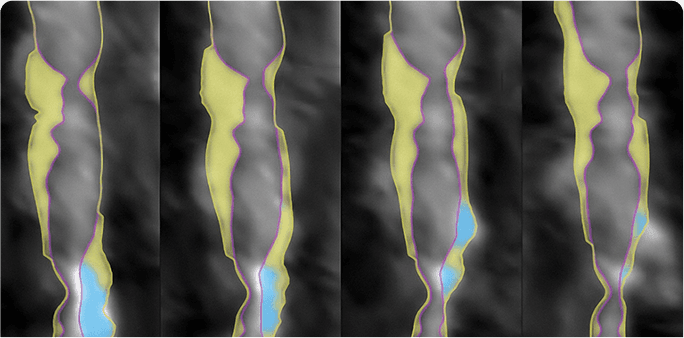
Cleerly is a plaque analysis AI software for coronary CT angiogram data. Instead of a radiologist looking at your CT angiogram image, Cleerly's AI maps out your heart arteries and detects plaque buildup in them, their total volume, and composition.
That last part, composition, is important. Hard, calcified plaque is generally stable. Soft plaque is intermediate risk and low-density plaque is high risk because it can rupture and cause a heart attack. Cleerly displays your plaque composition by color coding it and produces a color-coded report showing exactly where each type is present and where in your arteries.
Cleerly received FDA clearance in 2020 and has been trained on over 10 million images from more than 40,000 patients. In 2025, Cleerly also added an ischemia analysis tool that checks whether blockages are actually reducing blood flow.
Read moreCleerly heart scan: what it is, cost, and is it worth it?What does HeartFlow do?
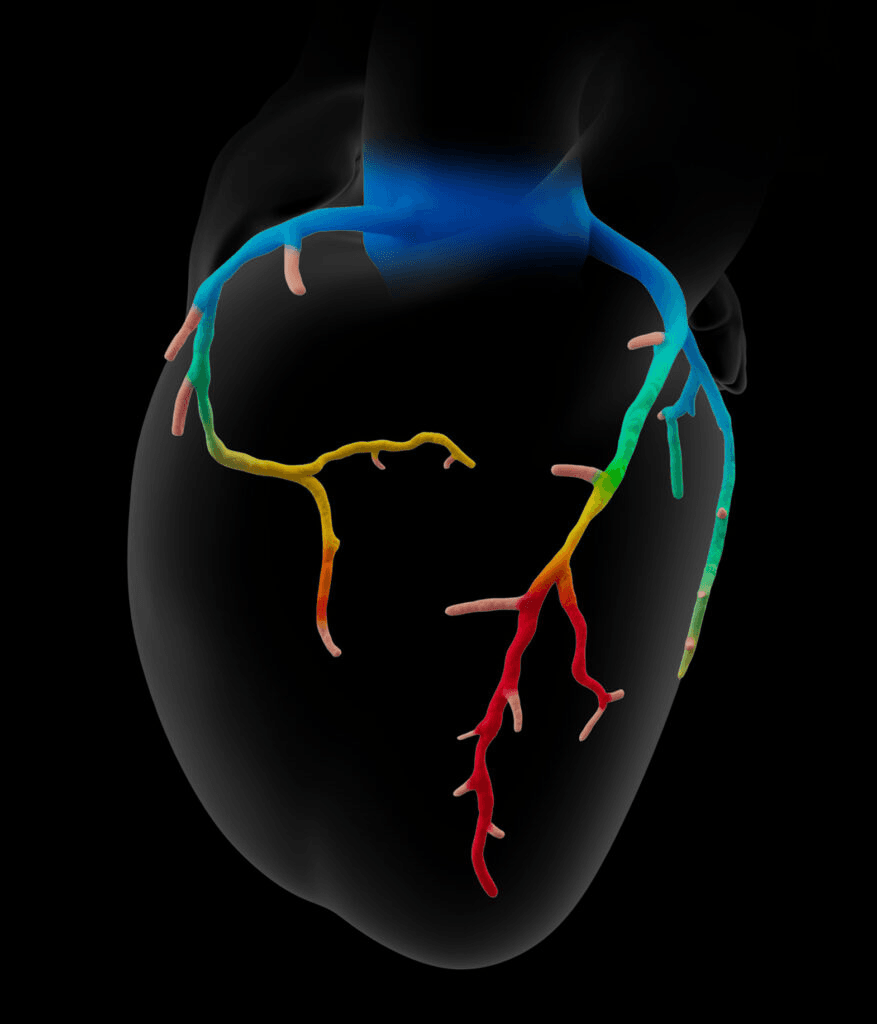
Interestingly, HeartFlow started about 10 years before Cleerly. The founders of HeartFlow wanted to find if there is sufficient blood flow in heart arteries. So they designed a virtual simulation to see whether a plaque buildup is actually restricting blood flow to your heart (and thus the name HeartFlow).
Their method is called FFR-CT (fractional flow reserve from CT). Normally, checking blood flow requires an invasive catheter through the arteries. It's typically used in patients with chest pain symptoms to find if they have sufficient blood flow in their arteries or would require stents.
HeartFlow received FDA clearance in 2014, making it the first AI cardiac imaging tool to reach the U.S. market. In September 2025, it launched a plaque analysis platform with advanced color-coded plaque reports, moving into Cleerly's territory.
Read moreHeartFlow analysis: what it is, cost, and who needs itCleerly vs HeartFlow: head-to-head comparison
Both tools extract much more from a CT angiogram heart scan than a human reader alone. They started with different problems though they're now expanding into each other's territory. Here's how they compare.
Cleerly vs HeartFlow comparison
| Category | Cleerly | HeartFlow |
|---|---|---|
| Core strength | Plaque analysis (type, volume, location) | Blood flow simulation (FFR-CT) |
| FDA clearance | 2020 | 2014 |
| Key clinical trial | CERTAIN trial (750 patients) | PLATFORM trial (584 patients) |
| Main result | Changed treatment in 57% of patients | Reduced unnecessary invasive catheterizations by 83% |
| Plaque analysis | Yes (original focus) | Yes (added 2025) |
| Blood flow analysis | Yes (added 2025) | Yes (original focus) |
| Out-of-pocket cost | Scan + AI: about $1,000 to $2,500 | Scan + AI: about $1,000 to $2,500 |
Both companies continue to add features but they're both kind of expensive, especially for out-of-pocket pay.
How accurate is a Cleerly heart scan?
The main evidence for Cleerly comes from its CERTAIN trial, a study of 750 patients at five U.S. sites. Using Cleerly changed treatment decisions in over 57 percent of patients. It also increased doctors' diagnostic confidence five-fold and reduced the need for further testing by 37 percent.
Cleerly CERTAIN trial
Treatment decisions changed in 57% of patients
Cleerly's detailed plaque analysis gave doctors information they did not have from a standard read, leading to different and more precise treatment plans in more than half the cases studied.
Research also shows that Cleerly's AI improved agreement between different readers by about 30 percent and cut reporting time by about 40 percent. When two doctors look at the same scan, AI helps them reach the same conclusion more often.
Is HeartFlow covered by Medicare?
Yes. In January 2025, HeartFlow's FFR-CT became the first AI cardiac imaging tool to receive a Medicare billing code. That was a landmark moment because it opened the door for broader coverage of AI heart scan tools across the industry.
In January 2026, AI plaque analysis (used by both Cleerly and HeartFlow) received its own Medicare billing code (CPT 75577) with a payment rate of about $1,000.
How much does a Cleerly heart scan cost?
The cost of a Cleerly heart scan depends on whether your insurance covers it. If you are paying out of pocket, a coronary CT angiogram plus AI analysis typically runs about $1,000 to $2,500, depending on the imaging center and your location.
What is the difference between a CT angiogram and a Cleerly?
A CT angiogram is the heart scan itself. It uses a CT machine and contrast dye to take detailed images of your heart arteries. A Cleerly analysis is what happens after the scan. Cleerly's AI software takes those same images and runs a deeper analysis of your plaque.
Read moreWhat does a CT angiogram show?Which one is right for you?
Most patients do not choose between Cleerly and HeartFlow themselves. Their doctors typically use whichever platform they have access to. Both tools deliver significantly more insights than a standard CT angiogram.
That said:
- If the main question is "what kind of plaque do I have and how much?" Cleerly's original strength in plaque analysis gives it an edge.
- If the main question is "is this blockage actually reducing blood flow?" HeartFlow's FFR-CT simulation was built for exactly that.
- If you want both, both platforms now offer plaque and blood flow analysis. Their features are converging.
What matters most is that your coronary CT angiogram gets analyzed by AI at all. Research shows that AI-assisted reads are more accurate and more consistent than standard human-only reads but at the same time, a question worth asking is: is it going to change my treatment decision? Whether it is Cleerly or HeartFlow, either one gives you and your doctor a clearer picture of your heart health.
The bottom line
Cleerly and HeartFlow both pull more useful information from a coronary CT scan than a standard read alone. Cleerly started with plaque analysis, HeartFlow started with blood flow simulation, and both are now expanding into each other's territory. Medicare and private insurers are covering these tools, and major cardiology organizations have endorsed AI plaque analysis as a standard clinical consideration.
7 Sources
Cleerly Health CERTAIN clinical trial results: AI plaque analysis changes treatment in 57% of patients
https://cleerlyhealth.com/press/cleerly-announces-certain-clinical-trial-resultsHeartFlow PLATFORM trial: HeartFlow analysis decreases invasive diagnostic testing
https://www.heartflow.com/press-release/platform-trial-shows-Heartflow-analysis-decreases-invasive-diagnostic/HeartFlow Investor Relations FDA 510(k) clearance and launch of next-generation plaque analysis platform
https://ir.heartflow.com/news-releases/news-release-details/heartflow-announces-fda-510k-clearance-and-launch-nextCleerly Health CPT 1 code approved for AI-powered plaque analyses (CPT 75577)
https://cleerlyhealth.com/press/cpt-1-code-plaque-analysesSTAT News Medicare coverage for AI heart scans: HeartFlow, Cleerly, and Elucid
https://www.statnews.com/2025/11/11/medicare-coverage-ai-heart-scans-heartflow-cleerly-elucid/Cardiovascular Business Reimbursement expected to drive implementation of CCTA AI-powered plaque analysis
https://cardiovascularbusiness.com/topics/cardiac-imaging/computed-tomography-ct/reimbursement-expected-drive-implementation-ccta-ai-powered-plaque-analysisHeartFlow Investor Relations ACC and AHA scientific statements support HeartFlow plaque analysis
https://ir.heartflow.com/news-releases/news-release-details/heartflow-plaque-analysis-now-supported-scientific-statements