
Written by Arvind Srivastav
Updated
Triglycerides are the most lifestyle-responsive number on your lipid panel. Here's what your level means, why it matters for your heart, and how to bring it down.
Written by Arvind Srivastav
Updated
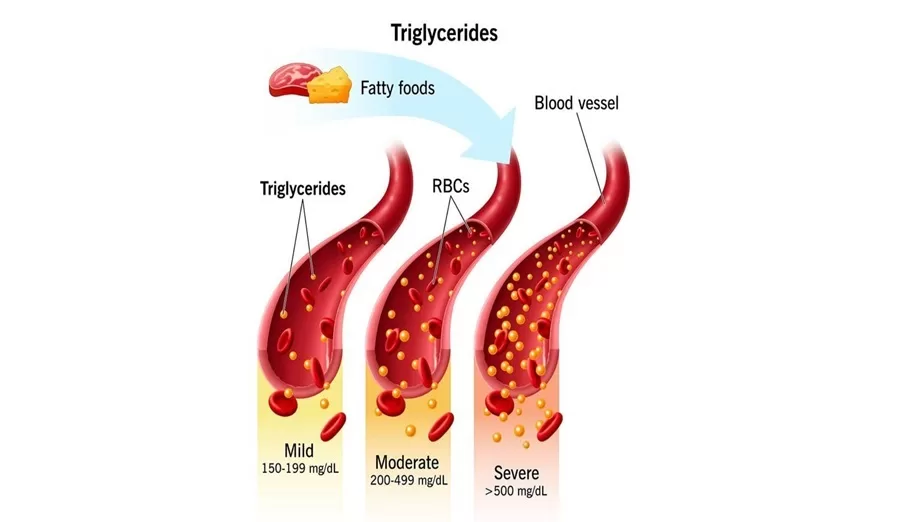
Triglycerides are another piece of the heart-risk puzzle, but they play a different role than LDL cholesterol. They're not cholesterol at all. They're fats your body uses for energy storage. When levels stay high, it's usually a signal that your metabolism isn't handling sugar and carbs well. The good news: triglycerides are the most responsive number on your lipid panel. Diet and exercise alone can cut them dramatically.
Triglycerides are a type of fat in your blood. When you eat more calories than your body needs right away, it converts the excess into triglycerides and stores them in fat cells. Between meals, hormones release triglycerides for energy.
A standard lipid panel measures triglycerides alongside your cholesterol numbers. But triglycerides aren't cholesterol. They're an energy reserve. When they stay elevated, it means your body is consistently taking in more fuel than it can use, especially from sugar, refined carbs, and alcohol.
Your triglyceride level is measured from a blood draw, ideally after fasting for 9 to 12 hours. Here's how to read your number:
| Category | Level (mg/dL) | What it means |
|---|---|---|
| Normal | Below 150 | Healthy range; no action needed |
| Borderline high | 150–199 | Worth watching; lifestyle changes can help |
| High | 200–499 | Increases cardiovascular risk; talk to your doctor |
| Very high | 500 and above | Risk of pancreatitis; medication usually needed |
Non-fasting levels run about 20–25 mg/dL higher. A non-fasting level of 175 mg/dL or above is considered elevated in current guidelines.
High triglycerides rarely act alone. They're usually part of a cluster of problems called metabolic syndrome, which includes high blood sugar, high blood pressure, low HDL (the "good" cholesterol), and excess belly fat. About one in three U.S. adults has metabolic syndrome, and elevated triglycerides are one of its defining features.
Triglycerides travel through your blood inside particles called VLDL (very low-density lipoprotein). As those particles break down, they leave behind remnants that can lodge in artery walls and drive plaque buildup. Research shows these remnant particles can deliver up to four times more cholesterol to artery walls than regular LDL particles.
Pancreatitis threshold
500 mg/dL
Triglycerides above 500 mg/dL significantly increase the risk of acute pancreatitis, a painful and potentially dangerous inflammation of the pancreas.
Unlike LDL, which is strongly influenced by genetics, high triglycerides are most often driven by what you eat and drink. The biggest culprits:
| Cause | How it raises triglycerides |
|---|---|
| Sugar and refined carbs | Your liver converts excess sugar into triglycerides. Sodas, juice, pastries, and white bread are major drivers. |
| Alcohol | Even moderate drinking can raise triglycerides. Heavy drinking can push levels very high. |
| Excess calories | Eating more than your body burns, regardless of the source, gets stored as triglycerides. |
| Inactivity | Exercise helps your muscles burn triglycerides. Without it, levels tend to climb. |
| Medical conditions | Diabetes, hypothyroidism, kidney disease, and some medications can raise levels. |
This is where the story gets encouraging. Triglycerides respond to lifestyle changes faster and more dramatically than almost any other number on your lipid panel. Here's what the research shows:
Combined lifestyle impact
Up to 50%
Diet changes, exercise, and modest weight loss together can reduce triglycerides by up to 50%, making them one of the most modifiable risk factors for heart disease.
When lifestyle changes aren't enough, or when levels are very high (500+ mg/dL), your doctor may recommend medication. Icosapent ethyl (a prescription omega-3) reduced major cardiovascular events by 25% in a large clinical trial. Fibrates are sometimes used for very high levels to prevent pancreatitis. These are conversations to have with your doctor based on your full risk picture.
Here's a part of the puzzle that often goes unnoticed. When triglycerides are high, your liver produces more small, dense LDL particles. These smaller particles are more dangerous because they penetrate artery walls more easily. A standard lipid panel measures the amount of cholesterol inside LDL, but it doesn't count how many particles you have. That's where ApoB comes in.
ApoB counts the total number of particles that can cause plaque, including those small dense LDL particles that high triglycerides create. If your triglycerides are borderline or high, your LDL number alone may underestimate your risk. Asking your doctor for an ApoB test gives you the fuller picture. And a coronary CT angiogram can show whether plaque has already started forming in your arteries.
This guide is for educational purposes and is not medical advice. Please consult your doctor for personalized recommendations.
Triglycerides are included in a standard lipid panel, so they're checked anytime your cholesterol is tested. Adults should have a lipid panel at least every 4 to 6 years, or more often if levels are elevated or you have risk factors.
Fasting for 9 to 12 hours before the test gives the most accurate triglyceride reading. Non-fasting tests are acceptable for general screening, but if your non-fasting level comes back above 175 mg/dL, your doctor may want a fasting retest. If your levels are elevated, ask about an ApoB test and a calcium score to understand your full cardiovascular picture.
Triglycerides are a window into how well your metabolism is working. High levels signal that sugar, carbs, or calories are outpacing what your body can burn. The empowering part: this is one of the numbers you have the most control over. Diet and exercise changes can produce meaningful drops in weeks, not months.
2026 ACC/AHA Guideline on the Management of Dyslipidemia (Circulation)
Triglycerides and Cardiovascular Disease: A Scientific Statement
Triglycerides: Why do they matter?
How to lower your triglycerides naturally
Triglycerides and heart health
Optimizing Non-Pharmacologic Management of Hypertriglyceridemia
Current and Emerging Treatment Options for Hypertriglyceridemia: State-of-the-Art Review
Triglycerides, Triglyceride-Rich Lipoproteins, and Remnant Cholesterol in Atherosclerotic Cardiovascular Disease
Metabolic Syndrome
Hypertriglyceridemia (StatPearls)