

You may have heard of Prenuvo, a company that offers elective whole-body MRIs. But what is a Prenuvo scan, and should you get one? This guide is designed to help you understand the Prenuvo scan better before you make an appointment.
A Prenuvo scan, being a whole-body MRI, uses radiation-free magnetic fields to create detailed images of your organs, brain, and spine.
While your doctor might order an MRI to investigate something specific, like a persistent headache or a suspicious lump, a Prenuvo scan is an elective, proactive procedure. In other words, it's built for people who have no symptoms and no specific reason to suspect a problem.
The scan looks broadly, before anything feels wrong, rather than zooming in on one area because something already does. It’s designed to detect conditions like early-stage tumors, cysts, and aneurysms before they start causing symptoms.
Below, we'll walk through what the scan actually covers, what "detect" means in this context, and what it can miss.
Key Takeaways
- A Prenuvo scan is a screening MRI for asymptomatic people (people without any specific symptoms). It’s not a diagnostic MRI, which is ordered to investigate a known problem.
- The standard scan can detect solid lesions around 1 cm or larger and cerebral aneurysms around 3 mm or larger, but it has real, specific limits, including some Prenuvo names itself.
- Independent radiology organizations don't recommend routine whole-body MRI screening for people without symptoms or specific risk factors.
- The standard scan does not evaluate your coronary calcium score or plaque build-up at all. For this purpose, it’s better to opt for a CT angiogram, which looks at both soft and hard plaque buildup.
What Is a Prenuvo Scan, Exactly?
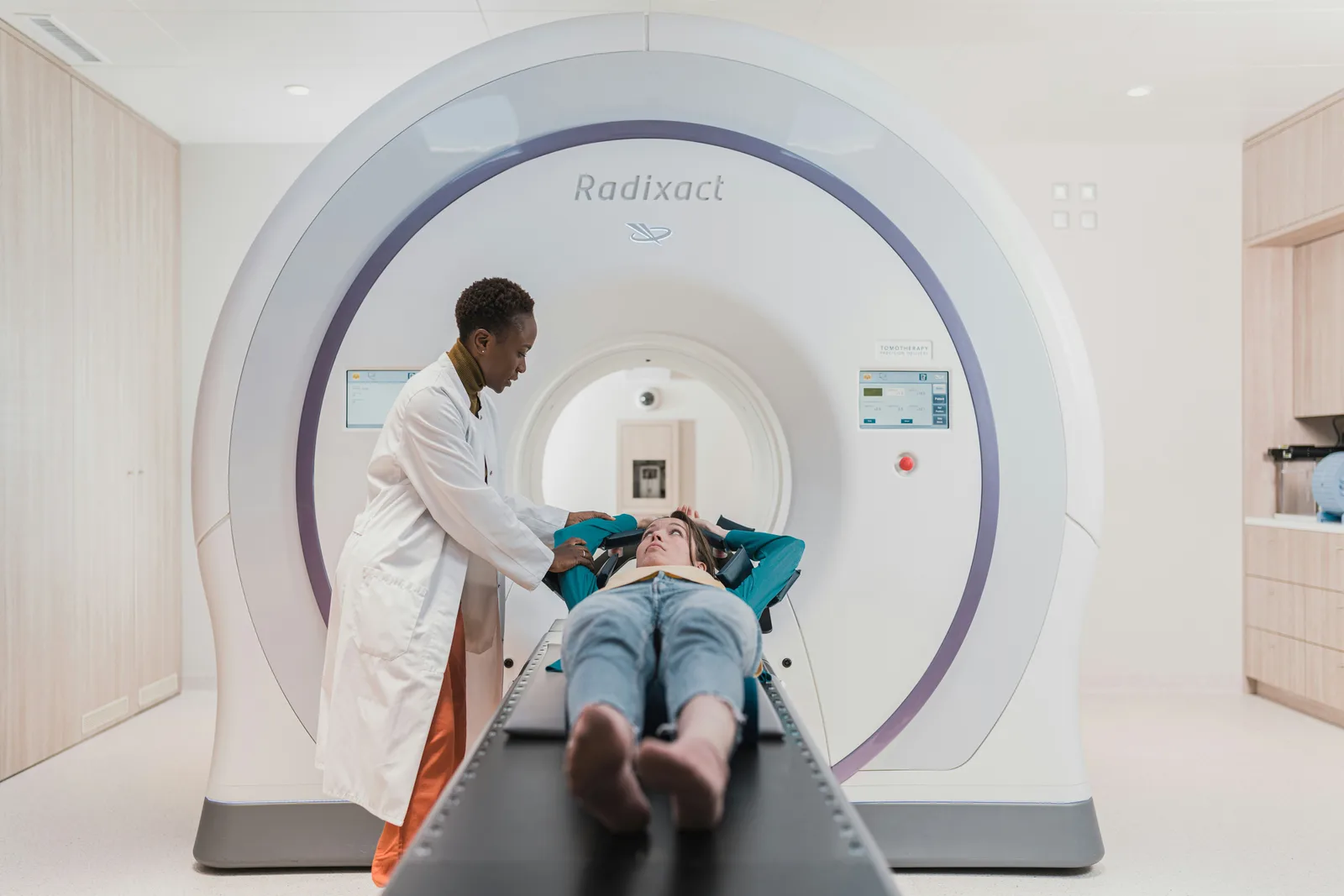
Prenuvo is a whole-body MRI screening service that was founded in 2018.
The scans use magnetic resonance imaging (MRIs) — a non-invasive, radiation-free technology — to capture detailed images across most major organ systems, the brain, and the spine in a single appointment. These scans are read and interpreted by board-certified radiologists.
While doctor-ordered MRIs are typically ordered to look at a specific body part because you have a concerning symptom or condition, Prenuvo scans are elective and proactive. They’re designed for asymptomatic people — in other words, people with no symptoms.
Why have a preventative MRI screening? The idea is that it looks broadly at the entire body so that it can pick up on anything worth flagging. For example, Prenuvo claims their scans may pick up on early signs of tumors and cysts, so that you can treat it before it starts causing symptoms.
Prenuvo built its own imaging protocols and hardware specifically for screening asymptomatic people, rather than adapting standard MRI equipment.
Prenuvo operates its own clinics across a couple dozen locations in North America, with some international availability. Since locations and prices can differ, Prenuvo's own directory is the most reliable way to check current availability near you.
What Happens Before, During, and After a Prenuvo Scan
Curious about what a Prenuvo scan entails? Here’s what you need to know:
Before: You'll generally be asked to fast for about four hours beforehand and avoid heavy meals. On arrival, you'll change into scrubs and remove metal objects, since metal can interfere with the imaging. Technologists screen for MRI contraindications, including certain pacemakers and implanted devices, so it's worth disclosing any of these when you book, not just at the appointment.
During: The scan itself typically runs 45 to 90 minutes depending on which package you choose, using an open-bore scanner design that Prenuvo says reduces claustrophobia compared to standard closed MRI machines. No contrast dye or injection is used for the standard scan. You'll be in contact with a technologist throughout, and sedation is available for people with significant claustrophobia or anxiety.
After: You'll typically receive results within about five business days, longer for certain locations or more comprehensive packages, delivered through Prenuvo's app alongside a written report. A copy can be sent to your physician if you provide their information.
If anything requires follow-up, Prenuvo offers a post-scan appointment with one of its own providers to walk through the findings.
What Can a Prenuvo Scan Actually Detect?

Prenuvo states its scan can detect hundreds of conditions across dozens of organ systems — including abnormalities in the muscles, bones, brain, reproductive organs, digestive system, kidneys, bladder, sinuses, thyroid, and more.
According to Prenuvo, the scan is generally effective at visualizing solid lesions around 1 cm or larger in the head, neck, chest, abdomen, and pelvis, and is sensitive to cerebral artery aneurysms around 3 mm or larger.
But remember that "detect" doesn't mean “diagnose”. A flagged finding on a screening MRI is a reason to look closer, not a confirmed medical conclusion.
If something unusual is found on your scan, you will likely need further follow-up appointments to get a diagnosis. Sometimes, abnormal findings are benign — in other words, not harmful. It’s important to keep this in mind when budgeting for a Prenuvo scan.
What Can a Prenuvo Scan Miss?
According to Prenuvo's own published limitations, the scan:
- Is meant to complement, not replace, established screening tests like mammograms, colonoscopies, and Pap smears
- Is generally limited to solid lesions around 1 cm or larger, meaning smaller lesions can be missed
- Does not evaluate the heart or coronary arteries at all
- Does not evaluate lung microarchitecture or small pulmonary nodules
- Does not replace dedicated breast imaging like mammography
- Is limited in evaluating the gastrointestinal tract and can't detect things like bowel polyps the way a colonoscopy can
- Is not tailored for detailed evaluation of joint ligaments, cartilage, or the labrum
- Should not be treated as a primary skin cancer screening method
It's also worth remembering that finding more things isn't automatically the same as improving your health. A Prenuvo scan is a screening tool — it’s not a treatment in itself.
Related reviewPrenuvo Reviews: Is a Whole-Body MRI Actually Worth It?What Does Independent Evidence Say About This Kind of Screening?
Do preventative MRI screenings actually help people live longer or healthier lives? The research on this isn’t clear.
A 2018 systematic review and meta-analysis in the British Medical Journal looked at data from 32 studies covering more than 27,000 asymptomatic adults who underwent brain and body MRI. Around 3.9 percent of these scans had “potentially serious” findings. But on follow-up, only about one in five of these cases had a serious final diagnosis. It’s not clear whether early detection actually led to more effective treatment.
A separate 2020 review in Cancer Imaging, pooling 12 studies and more than 6,000 whole-body MRI exams, reached a similar conclusion: abnormal findings are common, but the evidence needed to recommend routine screening in the general population still isn't there.
That research is part of why independent organizations have landed where they have. The American College of Radiology has stated it doesn't believe current evidence justifies recommending total-body screening for people without symptoms, risk factors, or a family history suggesting a specific concern.
The American Academy of Family Physicians lists whole-body scanning for early tumor detection in asymptomatic people as a practice to generally avoid. The American Cancer Society's own guidelines for early cancer detection, separately, cover specific, validated tests like mammograms and colonoscopies. Whole-body MRI isn't among them.
None of that means the scan isn’t legitimate. But there isn’t yet strong research to suggest it actually enhances peoples’ well-being on a population level — not for a general, average-risk group.
What Happens After an Unclear Finding?
If your scan flags something ambiguous, the next step is usually to talk with a provider. Depending on your preferences, you can find a provider through Prenuvo's own post-scan review or your regular doctor, followed by whatever targeted testing makes sense for that specific finding. That could mean additional imaging, lab work, or in less common cases a biopsy.
It’s important to remember that this follow-up testing is not included in your original scan price. When considering what a Prenuvo scan costs, remember that you might have to budget for follow-up care if anything turns up on your scan.
How Does the Standard Scan Differ From Prenuvo's Heart Offering?
Prenuvo's standard whole-body scan may be able to detect a few heart-related issues, including:
- Aortic aneurysm
- Cardiac metastases
- Cardiac lesions
- Enlarged heart
- Pericardial effusion
- Pericardial fat
Separately, at select locations, Prenuvo offers an Advanced Heart Health Scan built around a technology called MyoStrain, licensed from Myocardial Solutions. MyoStrain uses MRI to measure how your heart muscle moves and contracts with each heartbeat.
Neither the standard Prenuvo scan nor the Advanced Heart Health Scan can replace specific diagnostic tests and scans, like a coronary CT angiogram, an echocardiogram, or an EKG.
Prenuvo states that their offerings are designed to complement other cardiac tests, not replace them.
If your actual concern is your heart, specifically whether you have coronary artery disease or plaque buildup, that requires a test built for that exact question. A coronary calcium score or a coronary CT angiogram are the tests designed to look directly at your coronary arteries.
Who Should Talk to a Clinician Before Booking?
It may be worth talking to a clinician before booking a Prenuvo scan, especially if you:
- Have a family history of a specific, imageable condition
- Already have symptoms (as this should be evaluated directly)
- Aren’t sure whether an MRI is a safe option for you
A doctor can help you think through whether a broad screening scan, a more targeted test, or watchful waiting fits your actual situation best, and can help you plan for what happens if something unclear turns up.
What Does a Prenuvo Scan Cost?
Briefly: pricing currently ranges from about $1,199 for a limited scan up to roughly $4,000 to $4,500 for the most complete annual membership tier, depending on location. Insurance typically doesn't cover it, though HSA and FSA funds often can.
We created a full guide on the costs of a Prenuvo scan — including a breakdown on your options and extra costs you may have to budget for.
Pricing guideHow Much Does a Prenuvo Scan Cost?Frequently Asked Questions
A whole-body MRI screening service for people without symptoms, designed to flag potential health concerns across major organs, the brain, and the spine in a single appointment, without radiation or contrast dye.
No, neither Prenuvo offering does this. A coronary calcium score or coronary CT angiogram are the tests specifically built to evaluate your coronary arteries.
It's generally effective for its stated purpose, flagging solid lesions around 1 cm or larger and aneurysms around 3 mm or larger, but it has real, specific limitations Prenuvo names itself, including missing smaller lesions, lung microarchitecture, and certain cancers better caught by dedicated screening tests.
Not quite. The same basic technology is the same. But a doctor-ordered MRI is usually diagnostic, investigating a specific known symptom or concern. A Prenuvo scan is a screening test for people without symptoms, looking broadly rather than at one specific area.
Prenuvo operates its own clinics across a couple dozen locations in North America, with some international availability. Since locations and prices can differ, Prenuvo's own directory is the most reliable way to check current availability near you.
You'd typically have a follow-up conversation with a provider, then possibly additional imaging, lab work, or in less common cases a biopsy, depending on what was found.
Not routinely for people without symptoms or specific risk factors. Independent groups including the American College of Radiology have stated current evidence doesn't support recommending it broadly, even though the scans themselves do detect real findings.
The Bottom Line on Prenuvo Scans

A Prenuvo scan is a whole-body MRI built to screen asymptomatic people for potential health conditions. The scan can indeed detect solid lesions and aneurysms above certain size thresholds, which may be helpful. The scan also has clear, specific limits, several of which Prenuvo states outright.
If your actual question is about your heart specifically, that requires a different, dedicated test entirely. For everything else, the cost and the evidence on whether it's worth it each have a fuller answer in their own dedicated guide, linked throughout this one.
10 Sources
American Academy of Family Physicians Don't use whole-body scans for early tumor detection in asymptomatic patients
https://www.aafp.org/pubs/afp/collections/choosing-wisely/250.htmlAmerican Cancer Society Guidelines for the early detection of cancer
https://www.cancer.org/cancer/screening/american-cancer-society-guidelines-for-the-early-detection-of-cancer.htmlAmerican College of Radiology ACR statement on screening total body MRI
https://www.acr.org/News-and-Publications/Media-Center/2023/ACR-Statement-on-Screening-Total-Body-MRIGibson LM, Paul L, Chappell FM, et al Potentially serious incidental findings on brain and body magnetic resonance imaging of apparently asymptomatic adults: systematic review and meta-analysis
https://pubmed.ncbi.nlm.nih.gov/30467245/Prenuvo Conditions
https://prenuvo.com/conditionsPrenuvo Frequently asked questions
https://prenuvo.com/faqPrenuvo Locations
https://prenuvo.comPrenuvo Pricing
https://marketing.prenuvo.dev/pricingPrenuvo The scan
https://prenuvo.com/the-scanZugni F, Padhani AR, Koh DM, et al Whole-body magnetic resonance imaging (WB-MRI) for cancer screening in asymptomatic subjects of the general population: review and recommendations
https://www.ncbi.nlm.nih.gov/pmc/articles/PMC7216394/